Environmental management in chemical laboratories of Cuba
Article Sidebar
Main Article Content
Abstract
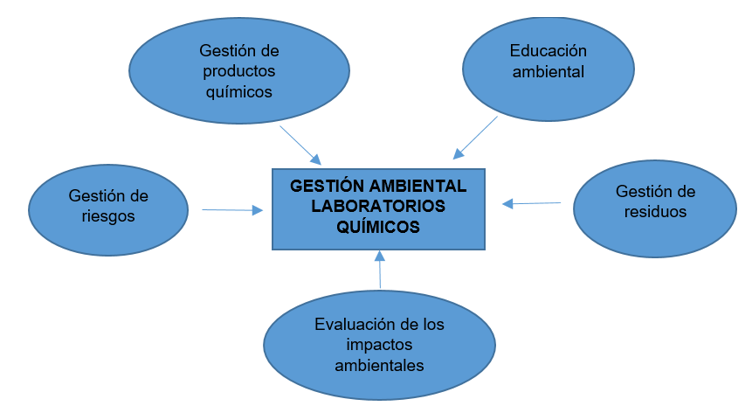
The use of chemicals has a negative impact on the environment. Substances used in chemical industries have been shown to have a significant impact on the environment, ranging from climate change to the destruction of fauna and flora and the contamination of drinking water. Obviously, having an adequate use of chemical products, controlling emissions and proper waste disposal, will contribute to sustainable development, aimed at guaranteeing the satisfaction of the fundamental needs of the population and raising their quality of life, through the rational management of natural resources, promoting their conservation, recovery, improvement, in such a way that the current and future generations have the possibility of using and enjoying them, on ethical and equity bases, guaranteeing life in all its manifestations. The application of current legislation and the execution of actions that guarantee adequate environmental management will reduce the negative effects that arise from the activities carried out in these institutions. The objective of this work is to identify some environmental management actions in chemical laboratories in Cuba and describe the regulatory framework applicable to these institutions
Article Details

This work is licensed under a Creative Commons Attribution-NonCommercial 4.0 International License.
Those authors who have publications with this journal accept the following terms:
- The authors will retain their copyright and guarantee the magazine the right to first publish their work, which will be simultaneously subject to the Creative Commons 4.0 Recognition-NonCommercial Recognition License that allows third parties to share the work whenever it is indicate its author and its first publication this magazine. Under this license the author will be free from:
- Share - copy and redistribute the material in any medium or format
- Adapt - remix, transform and create from the material
- The licensor cannot revoke these freedoms while complying with the terms of the license
Under the following conditions:
- Recognition - You must properly recognize the authorship, provide a link to the license and indicate if changes have been made. You can do it in any reasonable way, but not in a way that suggests that you have the support of the licensor or receive it for the use you make.
- NonCommercial - You may not use the material for a commercial purpose.
- There are no additional restrictions - You cannot apply legal terms or technological measures that legally restrict what the license allows.
- Authors may adopt other non-exclusive licensing agreements for the distribution of the version of the published work (e.g., deposit it in an institutional telematic archive or publish it in a monographic volume) provided that the initial publication in this journal is indicated.
- Authors are allowed and recommended to disseminate their work through the Internet (e.g., in institutional telematic archives or on their website) before and during the submission process, which can produce interesting exchanges and increase citations. of the published work. (See The effect of open access).
The magazine is not responsible for the opinions and concepts issued in the works, they are the sole responsibility of the authors. The Editor, with the assistance of the Editorial Committee, reserves the right to suggest or request advisable or necessary modifications. The mention of trademarks of specific equipment, instruments or materials is due to identification purposes, there being no promotional commitment in relation to them, neither by the authors nor by the publisher.
References
ANPP (Asamblea Nacional del Poder Popular). 1997. Ley 81 Del Medio Ambiente. Cuba: Gaceta Oficial No 7, 47p., Available [Consulted: may 8, 2018].
Avila, M. A. 2013. "Identificación de riesgo químico. Adaptación al método simplificadoCOSHHEssential al nuevo Reglamento 1272/2008 sobre etiquetado de sustancias y mezclas". Revista de Seguridad y Medio Ambiente. Available<http://www.mapfre.com/fundación/html/revistas/seguridad/n129/es/articulo2.html> [Consulted: may 8, 2021].
Barrantes J, o. C. 2013. Gestión de reactivos químicos en laboratorios de la Universidad Nacional de Costa Rica. Revista UNICIENCIA, 27(1), 266-283p. Available <http://www.revistas.una.ac.cr/uniciencia>.[Consulted: may 23, 2021].
Bolaños. 2007. "Protocolo para la gestión verde en laboratorios de química con fines académicos". Revista Pensamiento Actual, 12 (18-19), 47-58p, ISSN: 2215-3586.
Buroz, E. 1998. Gestión ambiental: Marco de referencia para las evaluaciones de impacto ambiental, Caracas, Venezuela: Fundación Polar. Available <https://www.worldcat.org/title/gestion-ambiental-marco-de-referencia-para-las-evaluaciones-de-impacto-ambiental/oclc/433098277> [Consulted:october 7, 2021].
Carranza, Y. M. 2013. Evaluación del Sistema de Gestión de las Sustancias Químicas y sus Residuos en los Laboratorios de Química, Toxicología y Ambiental del Departamento de Ciencias Forenses, Poder Judicial. Cartago, Instituto Tecnológico de Costa Rica, 4-44p., Available [Consulted:october 2, 2021].
CITMA. 2009 a. Resolución 136. Reglamento para el manejo integral de desechos peligrosos. ISSN 1682-7511, Cuba: Gaceta Oficial No 37, 1289-1295p., Available <http://www.gacetaoficial.cu> [Consulted: july 7, 2021].
CITMA. 2009 b. Resolución 132. Reglamento del proceso de evaluación de impacto ambiental. ISSN 1682-7511, Cuba: Gaceta Oficial No 37, 1280-285 p., Available <http://www.gacetaoficial.cu> [Consulted: july 7, 2021].
Conesa, V. 2010. Guía metodológica para la evaluación del impacto ambiental (cuarta ed.).: España Madrid, Ediciones Mundi-Prensa Libros S.A, Available <http://www.mundiprensa.com>[Consulted: july 10, 2021].
Consejo de Estado. 1999. Decreto ley N° 200 De las contravenciones en materia de Medio Ambiente. Cuba: Gaceta Oficial ordinaria-83-1999, 1339p. año XCVII, Available <http://www.gacetaoficial.cu> [Consulted: mayo 11, 2020].
Consejo de Estado. 2001. Decreto ley N° 225 De los explosivos industriales, medios de iniciación, sus precursore químicos y productos químicos tóxicos.ISSN 0864-0793, Cuba: Gaceta Oficial ordinaria-80-2001, 1640p., Available <http://www.gacetaoficial.cu> [Consulted: july 17, 2020].
Gómez, V. 2019. Matriz de Leopold: para qué sirve, ventajas, ejemplos. Lifeder., Avaible <http://www.lifeder.com> [Consulted: march 27, 2020].
Loayza, J. E. 2007. "Gestión Integral de Residuos Químicos Peligrosos (Conferencia)", Rev Soc Quím, 4(73), 259-260, ISSN: 1810-634X.
Marín-Sánchez, 2017. "Evaluación de riesgos químicos en un laboratorio de química Analítica por el método Cossh Essentials." Revista Científica de América Latina y el Caribe, España y Portugal. 91-106p, ISSN: 1027-2887.
NC. 2007. NC 521:2007. Vertimiento de aguas residuales a las zonas costeras y aguas marinas. Especificaciones. ICS: 13.060.30, Cuba: Oficina Nacional de Normalización, Available <http://www.nc.cubaindustria.cu> [Consulted: september 5, 2020].
NC. 2011. NC 871: 2011 Seguidad y salud en el trabajo-ruido en el ambiente laboral-requisitos higiénicos sanitarios. ICS: 13.140, Cuba: Oficina Nacional de Normalización, Available <http://www.nc.cubaindustria.cu>[Consulted: august 3, 2020].
NC. 2012. NC 27:2012.Vertimiento de aguas residuales a las aguas terrestres y al alcantarillado. Especificaciones. ICS: 13.060.30, Cuba: Oficina Nacional de Normalización, Available <http://www.nc.cubaindustria.cu> [Consulted: september 5, 2020].
NC. 2014. NC 229: 2014 Seguridad y salud en el trabajo-productos químicos peligrosos-medidas para la reducción del riesgo. ICS: 13.300, Cuba: Oficina Nacional de Normalización, Available <http://www.nc.cubaindustria.cu>[Consulted: december 12,2020].
NC. 2015. NC ISO 14001. Sistemas de gestión ambiental - Requisitos con orientación para su uso, Cuba: Oficina Nacional de Normalización, Available <http://www.nc.cubaindustria.cu> [Consulted: november 17, 2016].
NC. 2016. NC ISO 14004. Sistema de gestión ambiental. Directrices generales sobre la implementación. ICS 13.020.10, Cuba: Oficina Nacional de Normalización, Available <http://www.nc.cubaindustria.cu>[Consulted: august 14, 2018].
NC. 2018. NC ISO 31000. Gestión del riesgo ─ Directrices. Cuba. ICS: 03.100.01, Cuba: Oficina Nacional de Normalización, Available <http://www.nc.cubaindustria.cu>[Consulted: june 6, 2019].
Pineda, N. G. 2014. Manejo de Residuos Líquidos en un Laboratorio. Available <http://fisicoquimicasena.blogspot.com/p/manejo-de-residuos-liquidos-en- un.html. >[Consulted: june 7, 2021].
Rodriguez, R. 2004. Manual Evaluación de impactos ambientales. Cuba, Universidad de Holguín, Avaible <http://www.docplayer.es> [Consulted: march 11, 2020].